
Lead generation is the process of attracting potential business customers, collecting relevant contact details, and guiding suitable prospects toward a sales conversation. A sound b2b website lead generation architecture connects useful content, focused calls to action, qualification signals, and follow-up so each visitor has a clear next step.
Traffic alone doesn’t create a dependable pipeline; prospects need relevant information and a straightforward way to express interest. This article explains how to structure that journey, from matching lead magnets to audience needs to organizing inquiry details for meaningful follow-up.
You’ll also see how referrals, search, and other sources can bring potential clients to your website, and how targeted educational content can support their decisions. Use these principles to make your website a more purposeful part of business development, with a clear path from initial interest to a qualified conversation.
Key Takeaways
- Match each lead magnet to a prospect’s needs, then make the next step clear and easy to take.
- Use signals such as project scope, decision-making authority, and timing to guide qualification and follow-up.
- Assess how search, referrals, and industry platforms contribute to your pipeline, rather than treating every inquiry alike.
- Shape content around the specific audience you want to reach so prospects can recognize your expertise and take action.
1. Lead magnets as conversion funnels
A b2b website lead generation architecture connects a useful resource to a relevant next step. For an architecture firm, an e-book on design trends, local building codes, or working with contractors can attract prospects with active project questions. Webinars, case studies, brochures, PDFs, newsletters, and infographics can also support branding and business development. Each resource should address a specific audience need, not simply collect email addresses.
Short forms paired with a clear, relevant call to action make the exchange easy to understand. Ask only for details needed to deliver the resource and qualify the inquiry, such as a name, work email, company, and project type. “Download the planning guide” suits an educational offer; “Discuss your project” fits a prospect ready to explore development. Place the form beside the content that gives visitors a reason to act.
For Philippine B2B leads, explain why you collect contact details and how you will use them. Keep forms limited to relevant information, provide a clear privacy notice, and make email consent explicit. Send nurturing emails only to people who have opted in, and protect contact records through controlled access and careful data handling.
Build the conversion path around the pages prospects need: a service page, relevant case studies, educational blog posts, and a contact or consultation form. A blog post about planning constraints can guide a reader to a related case study, then to a project inquiry. Use a descriptive H1 and clear H2 and H3 headings to make each page’s purpose easy to follow.
Measure each step, from resource-page visits to form submissions and qualified opportunities. Use campaign tags on social and email links to identify which strategies bring inquiries, then compare lead quality by source. If visitors leave without taking action, test one change at a time, such as CTA wording, form fields, or the resource topic, and track its effect on conversion.
2. Lead qualification and nurturing
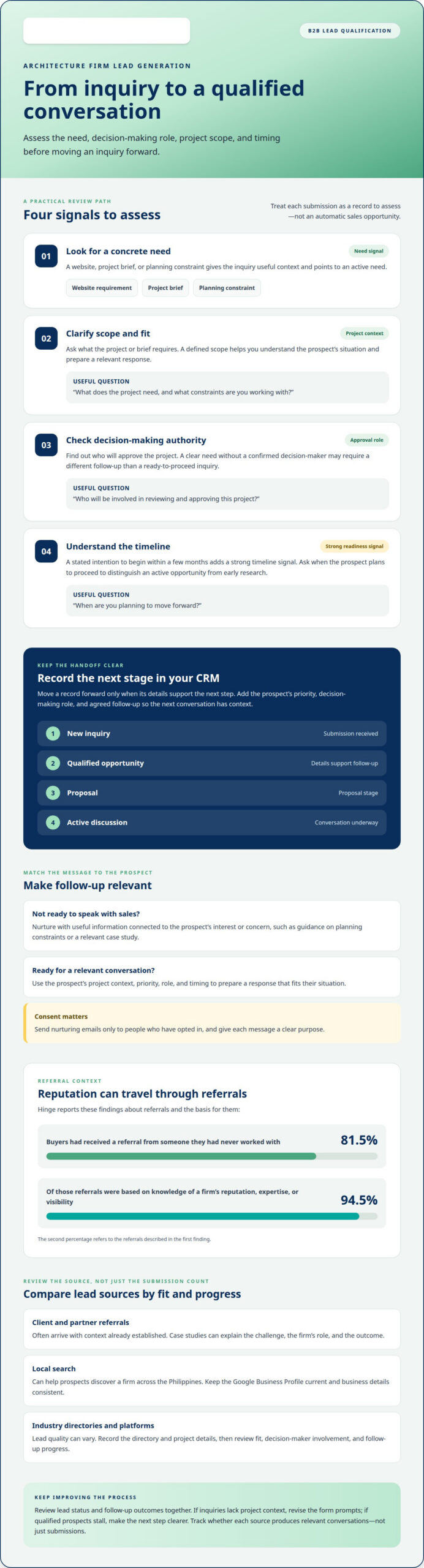
Qualification turns an inquiry into a useful business development signal. Treat each submission as a record to assess, not an automatic sales opportunity. A prospect with a website, project brief, or planning constraint shows a concrete need. A stated intention to begin within a few months adds a strong timeline signal. Together, these details help teams prioritize relevant conversations and prepare a response that fits the prospect’s situation.
Read each signal in context. A project may have a clear need but no confirmed decision-maker, or an interested decision-maker without a defined scope. Ask who will approve the project, what the website or brief requires, and when the prospect plans to proceed. These answers help distinguish an active opportunity from early research. They also reveal what information the prospect needs before deciding.
Set clear stages in your customer relationship management system, such as new inquiry, qualified opportunity, proposal, and active discussion. Move a record forward only when its details support the next step. Add a short note about the prospect’s priority, decision-making role, and agreed follow-up. That record gives colleagues context if ownership changes and prevents the next conversation from starting cold.
Nurturing keeps useful information in front of prospects who aren’t ready to speak with sales. Segment messages by interest or concern: a prospect focused on planning constraints can receive guidance on that topic, while someone comparing project approaches can receive a relevant case study. Adapt the message as the prospect’s needs develop. Send follow-ups only to people who opted in, and give each message a clear purpose.
Review lead status and follow-up outcomes together. If inquiries lack project context, revise the form prompts; if qualified prospects stall, make the next step clearer. Track whether each source produces relevant conversations, not just submissions. For a connected website and follow-up process, website workflow planning can help align forms, platforms, and sales stages around your qualification criteria.
3. Architecture lead sources
An architecture firm should assess each lead source by trust, project fit, and evidence of expertise. Client and partner referrals often arrive with context already established. Hinge reports that 81.5% of buyers had received a referral from someone they had never worked with. Hinge also reports that 94.5% of those referrals were based on knowledge of a firm’s reputation, expertise, or visibility. Publish case studies that explain the challenge, the firm’s role, and the outcome without relying on broad claims.
Local search can help prospects discover an architecture firm across the Philippines. Keep its Google Business Profile current, maintain consistent name, address, and phone information, and invite clients to leave reviews. Share project insights and case studies on social media, then use campaign tags to distinguish those visits from search or referral traffic. A tagged link in a post can show whether visitors reach a relevant service page or submit an inquiry.
Industry directories and platforms provide another source of inquiries, but lead quality can vary. Some prospects may focus mainly on price, while others can help fill early-stage capacity. Record the directory name and project details with each inquiry, then compare fit, decision-maker involvement, and follow-up progress. This makes channel performance visible without treating every submission as an equivalent opportunity.
Connect website forms to your CRM, then pass relevant records to marketing automation and analytics with consistent source labels. A shared record should preserve the original page, campaign, and inquiry details, so staff can follow a lead from first contact through opportunity stages. Common risks include lost submissions, incorrect field mapping, duplicate records, and unclear ownership. Reduce them by testing the full form-to-CRM route, limiting access to contact data, and assigning a clear owner for each inquiry.
4. Attracting a target audience
Use specific search topics to reach prospects at different stages. Long-tail keywords generally have lower search volume and competition, but higher conversion rates than short keywords. A phrase such as “web design for e-commerce in the Philippines” signals a clearer need than “web design.” Build content around the questions behind each phrase, then connect the page to a useful next step, such as viewing a related service or submitting a project inquiry.
Review audience fit through the inquiries each page generates. Compare the stated project type, location, and readiness across pages, then strengthen topics that bring valuable conversations. If a page attracts visitors but few suitable inquiries, make its audience and project focus more specific. Keep the language direct and the conversion path visible on mobile screens. Aligning page structure with audience intent takes deliberate planning; plan an audience-focused website that turns relevant content into a clearer route for potential clients.
Optimind Technology Solutions
Optimind helps businesses shape websites around how prospects discover, assess, and contact them. When lead generation depends on clearer audience journeys, connected forms, or more useful service pages, Optimind’s Web Design and Development and UX Design services can support that work.
For businesses with specific lead workflows, Custom Web Application Development can address requirements that standard website functions don’t cover. E-commerce solutions also support companies whose prospect journey includes product selection and online transactions. The right approach starts with your audience, content, and the steps prospects should take, then aligns the website structure with those needs.
Optimind brings web design and development expertise to projects that need a clearer, more practical digital experience. Request a Free Quote to discuss your website goals and lead generation needs.
Build a stronger path from interest to opportunity
Your next step is to treat the website as part of your sales operation, not a standalone marketing asset. A considered b2b website lead generation architecture can give prospects a clearer route from first interaction to meaningful conversation, while giving your team a practical foundation for refining that journey over time.
Optimind brings Web Design and Development, Custom Web Application Development, and UX Design together to address website structure, user journeys, and specific business workflows. Its services can help translate your priorities into a digital experience shaped around how your audience evaluates and contacts your business. The focus is on purposeful design and functionality, not a promise of guaranteed leads or sales.
Share your website goals and the workflow you want to improve. Contact Optimind Technology Solutions to discuss a practical next step for your business.
Frequently Asked Questions
What is lead generation?
Lead generation is the process of turning a potential buyer’s interest into an identifiable business inquiry. For example, a procurement manager who requests a product specification sheet becomes a lead when they share contact details. The next step is to understand whether their organization, needs, and readiness align with what your business provides, then respond with useful information.
How can I nurture potential clients in my pipeline?
Nurture potential clients by giving each contact a relevant reason to continue the conversation. If a prospect downloads a technical guide, a follow-up could explain how your solution addresses an issue covered in that guide. Record replies, meeting requests, and changes in project timing so your next message reflects current interest rather than repeating the same introduction.
Should I provide educational content to attract leads?
Yes, educational content can help potential clients understand a problem before they’re ready to speak with sales. Create material that answers a real decision-stage concern, such as a checklist for comparing project requirements or an explanation of common implementation trade-offs. Keep claims specific, identify who the material serves, and give readers a relevant next step without making every article a sales pitch.
What is a B2B website lead generation architecture?
A b2b website lead generation architecture is the structure connecting audience-focused pages, calls to action, contact data, and follow-up processes. It defines how a visitor moves from discovering a service to taking a useful action, and how that inquiry reaches the right internal owner. For example, a consultation request can carry the service page and campaign source that prompted it.
How should B2B websites qualify, score, and route leads?
Qualify leads using fit and intent, then route them according to the information submitted. A company matching your target market may show fit, while a detailed brief or requested meeting signals stronger intent. A scoring model can weigh those signals without treating every page visit as equal. Send complex or urgent inquiries to the appropriate sales owner, and direct early research toward relevant follow-up.